


Boxfish Add-on (TQM2026)
 Go to files
Ostraciidae or Ostraciontidae is a family of squared, bony fish belonging to the order Tetraodontiformes, closely related to the pufferfishes and filefishes. Fish in the family are known variously as boxfishes, cofferfishes, cowfishes and trunkfishes. It contains about 23 extant species in 6 extant genera.
Ostraciidae was first proposed as a family in 1810 by the French polymath Constantine Samuel Rafinesque.[1] In the past this grouping was regarded as a subfamily, the Ostraciinae, along with the subfamily Aracaninae, of a wider Ostraciidae. However, recent phylogenetic studies have concluded that the families Aracanidae and Ostraciidae are valid families but that they are part of the same clade, the suborder Ostracioidei.[2] The 5th edition of Fishes of the World classifies this clade as the suborder Ostracioidea within the order Tetraodontiformes.[3]
Ostraciidae takes its name from its type genus, Ostracion, a name which means "little box" and is an allusion to the shape of the body of its type species, O. cubicus.[4]
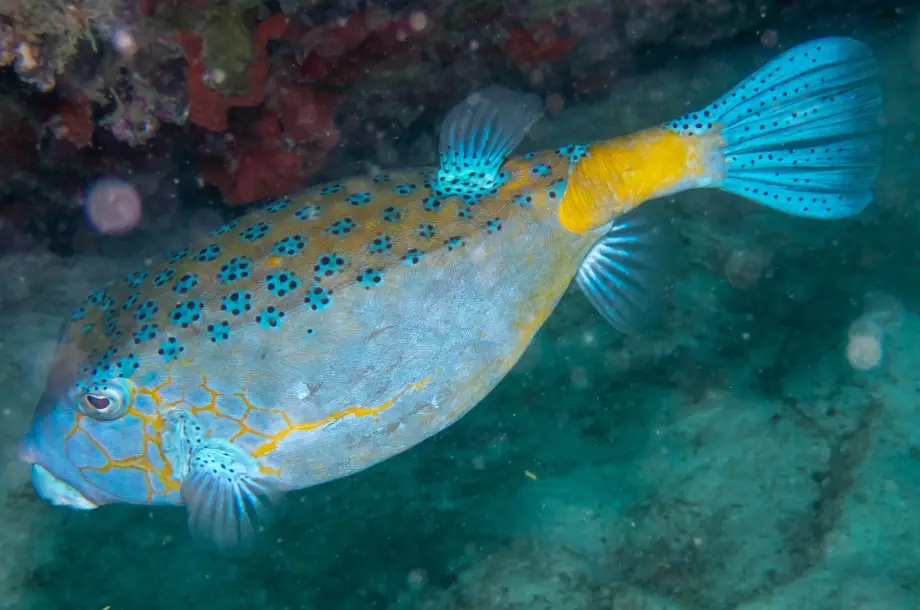
Ostraciidae boxfishes occur in a variety of colors, and are noted for the hexagonal or "honeycomb" patterns on their skin. They swim in a rowing manner. Their hexagonal plate-like scales are fused into a solid, triangular or box-like carapace, from which the fins, tail, eyes and mouth protrude. Because of these heavy armoured scales, Ostraciidae are limited to slow movements, but few other fish are able to eat the adults. Ostraciid boxfish of the genus Lactophrys also secrete poisons from their skin into the surrounding water, further protecting them from predation.[5] Although the adults are in general quite square in shape, young Ostraciidae are more rounded. The young often exhibit brighter colors than the adults. The scrawled cowfish, Acanthostracion quadricornis, can grow up to 50 centimetres (20 in) in length, but is generally smaller at higher latitudes.[citation needed]
Range
Ostraciids occur in the Atlantic, Indian, and Pacific oceans,[3] generally at middle latitudes, although the common or buffalo trunkfish (Lactophrys trigonus) which lives mainly in Florida waters may be found as far north as Cape Cod.[citation needed]
Toxic defences
The various members of this family are able to secrete cationic surfactants through their skin which can act as a chemical defense mechanism.[6] An example of this is pahutoxin, a water-soluble, crystalline chemical toxin that is contained in mucus secreted from the skin of Ostracion lentiginosus and other members of the trunkfish family when they are under stress.[7] Pahutoxin is a choline chloride ester of 3-acetoxypalmitic acid[8] that behaves similarly to steroidal saponins found in echinoderms.[7] When this toxic mucus is released from the fish, it quickly dissolves in the environment and negatively affects any fish in the surrounding area. It is possible since this toxin resembles certain detergents so closely, that adding these detergents as pollutants to seawater has potential to interfere with receptor-mediated processes in marine life.[9]
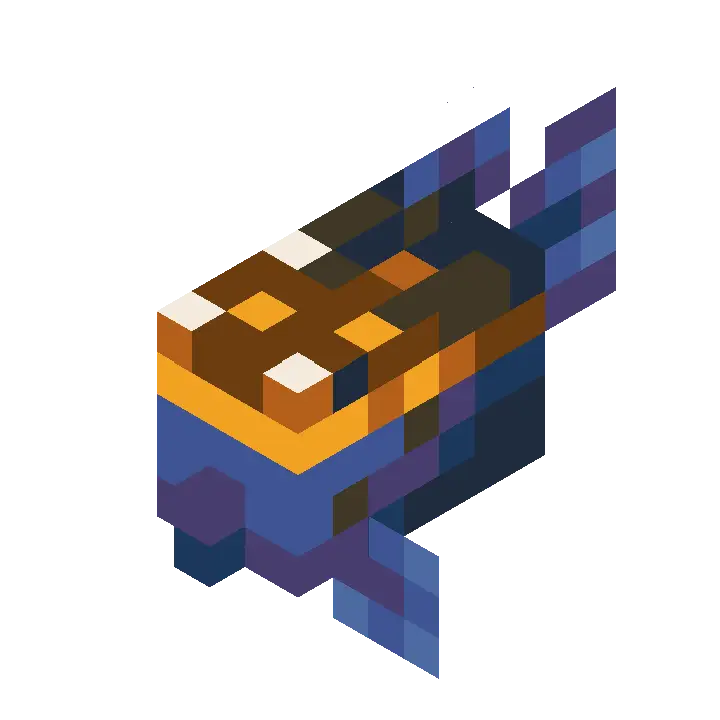
Yellow Boxfish are known for their odd box-shaped body along with their vibrant yellow hue. Despite the cute appearance, they are incredibly toxic to the touch. They lurk around the coral reefs of Roslit Bay during the day.
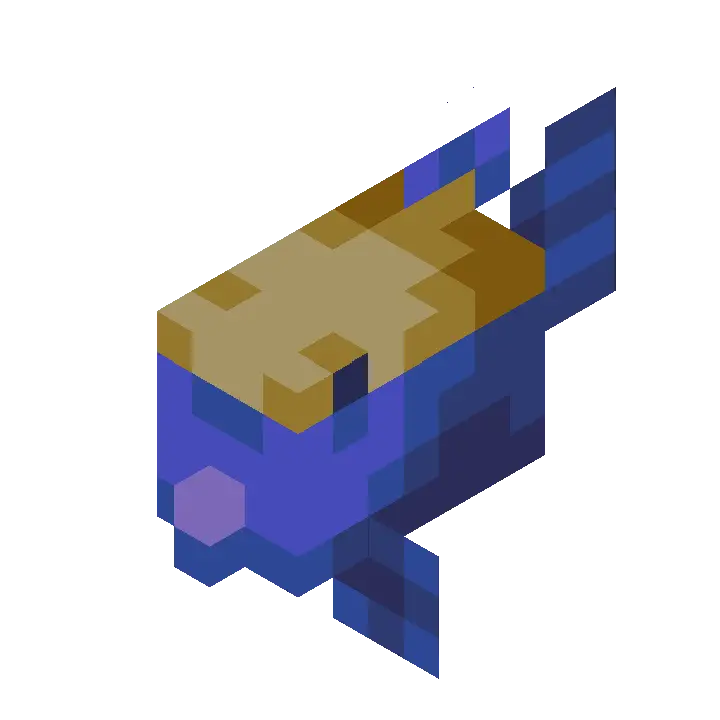
 Whitespotted Boxfish are also known to lurk around warm oceans, but they are aswell toxic.

Instead, you can interact with the other mods included: