
Aquatic Expansion Add-on | UPDATE
Go to files
Aquatic Expansion Addon
Explore the depths of Minecraft’s oceans and seas with the Aquatic Expansion Addon! Aquatic Expansion Addon features over 10+ sea and ocean creatures that blend seamlessly into the game’s aquatic environments. Encounter these mystical beings in their natural habitats and experience the wonders of the deep blue like never before.
Do you want to add new mobs in the Minecraft oceans? This addon is for you! It adds sharks and various other creatures in your oceans! Fill your oceans with life! Add all these animals to your world with this addon!
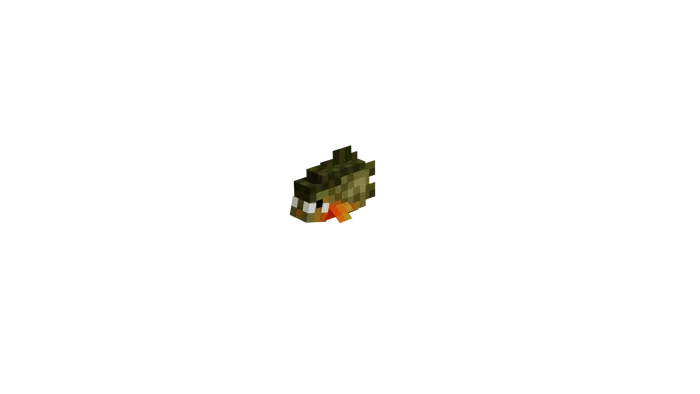
Piranhas are South American freshwater fish known for their sharp teeth, strong jaws, and omnivorous diet, with behavior and ecology varying by species.
Location: Jungle, Swamp
Sea snake is a venomous marine snake adapted to live almost entirely in the ocean, with specialized features for swimming and hunting underwater.
Location: Warm Ocean
Ocean sunfish (Mola mola) is one of the largest bony fish in the world, known for its distinctive flattened body and large dorsal fins.
Location: Lukewarm Ocean
Manta ray is a large, flat-bodied marine ray with wing-like pectoral fins, horn-shaped cephalic fins, and a wide, forward-facing mouth, known for filter-feeding on plankton and its graceful swimming.
Location: Lukewarm Ocean
Shark is a cartilaginous fish, often a top predator in the ocean, with a streamlined body, multiple gill slits, and specialized senses for hunting.
Location: Frozen Ocean, Shark Hunts
Rainbow fish are small, colorful freshwater fish known for their iridescent scales and peaceful nature, popular in aquariums worldwide.
Location: Swamp
Ephippus orbis, commonly known as the orbfish or orbiculate spadefish, is a species of marine fish in the family Ephippidae native to the shallow waters of the Indo-West Pacific region.
Location: Warm Ocean, Swamp
Fun Fact: Did you know that orbfishes are created in August 8, 2022?
Jellyfish are marine invertebrates found in oceans worldwide, from surface waters to deep seas, and occasionally wash ashore in large numbers.
Location: Ocean
Clam is a common name for several species of bivalve mollusc. The word is often applied only to those that are deemed edible and live as infauna, spending most of their lives halfway buried in the sand of the sea floor or riverbeds. Clams have two shells of equal size connected by two adductor muscles and have a powerful burrowing foot.
Location: Ocean
Crabs are decapod crustaceans characterised by having a heavily armoured shell, their tail segments concealed under the body, the ability to run sideways, and the habit of hiding in rocky crevices.
Location: Beach
Hammerhead sharks are distinctive marine predators with a wide, hammer-shaped head, found in warm coastal and tropical waters worldwide.
Location: Warm Ocean, Shark Hunts
Sand tiger shark (Carcharias taurus) inhabits subtropical and temperate waters worldwide and is known from sandy shorelines and submerged reefs.
Location: Lukewarm Ocean, Warm Ocean
Bala shark (Balantiocheilos melanopterus), also known as the tricolor shark or silver shark, is a freshwater fish commonly referred to as a shark due to its torpedo-shaped body and large fins.
Location: River
Giant squid (Architeuthis dux) is a deep-ocean dwelling squid that can grow to tremendous size, an example of abyssal gigantism. Recent estimates put the maximum body size at around 5 m for females (posterior fins to the tip of arms), with feeding tentacles up to 10 m.
Location: Ocean
Octopuses are highly intelligent, eight-armed mollusks known for their flexibility, camouflage, and complex behaviors.
Location: Ocean
Sturgeon are ancient fish known for their elongated bodies, bony plates, and role in caviar production.
Location: River
Trout are freshwater fish of the Salmonidae family, valued both as game and food fish.
Location: Ocean, River
Mackerel are fast-swimming, pelagic fish from the family Scombridae, valued for their ecological role and high omega-3 content.
Location: Ocean
Tetra fish are small, colorful, peaceful freshwater fish that thrive in schools and are popular in home aquariums.
Location: River, Jungle, Swamp
Variants: Neon Tetra (jungle), Cave Tetra* aberrant (caves possibly)
Rainbow shark (Epalzeorhynchos frenatum) is a Southeast Asian freshwater fish, popularly kept in aquariums; commonly known as ruby shark or red-fin shark, among other names.
Location: River
Cosmic jellyfish, also known as psychedelic jellyfish, are small, colorful invertebrates found in deep-sea environments, characterized by their helmet-shaped appearance and bioluminescent properties.
Location: Deep Ocean
Pelagia noctiluca is a jellyfish in the family Pelagiidae, typically known in English as the mauve stinger. It is found worldwide in tropical and warm temperate seas and is known for bioluminescence.
Location: Ocean
Atlantic herring (Clupea harengus) is one of the most abundant fish species in the world, congregating in large schools and feeding on copepods, krill and small fish.
Location: Cold Ocean, Frozen Ocean
Yellowfin tuna are large, fast, highly migratory pelagic fish recognized by bright yellow fins and streamlined bodies.
Location: Ocean
Channel catfish is North America’s most abundant freshwater catfish, known for its distinctive whiskers, forked tail, and omnivorous diet.
Location: Swamp
Lepomis or true sunfish is a genus of North American freshwater fish in the family Centrarchidae. The genus' most recognizable species is the bluegill.
Location: Swamp
Fathead minnow (Pimephales promelas) is a plump minnow commonly used as bait and for stocking lakes and ponds. Fish are graded by width, so length and counts are approximate. Permits required in some states.
Location: River, Jungle, Swamp
Blue tang is a bright blue reef fish known for its vibrant color, yellow tail, and role in marine aquariums, native to Indo-Pacific coral reefs.
Location: Warm Ocean
Goldfish are freshwater ornamental fish native to China, known for their vibrant colors and popularity as pets.
Location: Taiga
Koi are colorful ornamental carp prized for beauty, patterns, and longevity, commonly kept in outdoor ponds or water gardens.
Location: Jungle, Taiga
Mahi-mahi (Coryphaena hippurus) is a surface-dwelling ray-finned fish found in offshore temperate, tropical, and subtropical waters worldwide.
Location: Cold Ocean
Anglerfish are unique ray-finned fish known for their bioluminescent lure, which they use to attract prey in the dark depths of the ocean.
Location: Deep Cold Ocean
Coelacanths are ancient lobe-finned fish, often referred to as "living fossils," with two known species: the African coelacanth (Latimeria chalumnae) and the Indonesian coelacanth (Latimeria menadoensis).
Location: Deep Ocean
Colossal squid is the largest invertebrate by mass, reaching up to 700 kg and lengths of 10 meters, with enormous eyes adapted for deep-sea life.
Location: Frozen Ocean
Oarfish are long, ribbon-like deep-sea fish that inhabit the mesopelagic zone and are rarely seen alive by humans.
Location: Cold Ocean, Lukewarm Ocean
Flying fish are marine fish capable of gliding above the water using wing-like fins to escape predators and feed near the surface.
Location: Warm Ocean, Lukewarm Ocean
Chimaera monstrosa, commonly known as the rabbit fish or rat fish, is a northeast Atlantic and Mediterranean species of cartilaginous fish in the family Chimaeridae. They are known for a large head and small tapering body.
Location: Ocean, The Arch
The bluespotted ribbontail ray (Taeniura lymma) is a species of stingray in the family Dasyatidae. Found from the intertidal zone to a depth of 30 m (100 ft), this species is common throughout the tropical Indian and western Pacific Oceans in nearshore, coral reef–associated habitats. It is a fairly small ray, not exceeding 35 cm (14 in) in width, with a mostly smooth, oval pectoral fin disc, large protruding eyes, and a relatively short and thick tail with a deep fin fold underneath. It can be easily identified by its striking color pattern of many electric blue spots on a yellowish background, with a pair of blue stripes on the tail.
Location: Warm Ocean, Lukewarm Ocean, Stingray Migration
The spotted eagle ray (Aetobatus narinari) is a cartilaginous fish of the eagle ray family, Aetobatidae. As traditionally recognized, it is found globally in tropical regions, including the Atlantic, Pacific and Indian Oceans. Recent authorities have restricted it to the Atlantic (including the Caribbean and Gulf of Mexico) with other populations recognized as the ocellated eagle ray (A. ocellatus) and Pacific white-spotted eagle ray (A. laticeps). Spotted eagle rays are most commonly seen alone, but occasionally swim in groups. They are ovoviviparous, the female retaining the eggs then releasing the young as miniature versions of the parent.
Location: Warm Ocean, Stingray Migration
The cownose ray (Rhinoptera bonasus) is a species found throughout a large part of the western Atlantic and Caribbean, from New England to southern Brazil (the East Atlantic ones are now generally considered a separate species, the Lusitanian cownose ray (R. marginata)).[2] These rays also belong to the order Myliobatiformes, a group that is shared by bat rays, manta rays, and eagle rays.[3]
Location: Lukewarm Ocean, Stingray Migration
The bull shark (Carcharhinus leucas), also known as the Zambezi shark (informally zambi) in Africa and Lake Nicaragua shark in Nicaragua, is a species of requiem shark commonly found worldwide in warm, shallow waters along coasts and in rivers. It is known for its aggressive nature, and presence mainly in warm, shallow brackish and freshwater systems including estuaries and (usually) lower reaches of rivers. Their aggressive nature has led to ongoing shark-culling efforts near beaches to protect beachgoers, which is one of the causes of bull shark populations continuing to decrease. Bull sharks are listed as vulnerable on the IUCN Red List.[3]
Location: Warm Ocean, River
The great white shark (Carcharodon carcharias), also known as the white shark, white pointer, or great white, is a large shark. It is closely related to the mako sharks, the porbeagle, and the salmon shark. It is a robustly built species with a grayish upperside and a white underside. The white shark is one of the largest living shark and fish species, though it is still smaller than the whale shark and basking shark. It has about 300 triangular, serrated teeth that are continuously replaced. Its massive, fatty liver can reach over a quarter of its body weight, providing buoyancy and storing energy. The species is partially warm-blooded, an adaptation that allows it to remain active in colder waters.
Location: Warm Ocean, Lukewarm Ocean, Shark Hunt
The vaquita (/vəˈkiːtə/ və-KEE-tə; Phocoena sinus) is a species of porpoise endemic to the northern end of the Gulf of California in Baja California, Mexico. Reaching a maximum body length of 150 cm (4.9 ft) (females) or 140 cm (4.6 ft) (males), it is the smallest of all living cetaceans. The species is currently on the brink of Extinction, and is listed as Critically Endangered by the IUCN Red List; the steep decline in abundance is primarily due to bycatch in gillnets from the illegal totoaba fishery.
Location: Ocean
Aquatic Expansion blends creativity and realism. Dive in, explore new horizons, and uncover the secrets of the deep blue. Get ready to make a splash and encounter wonders like never before in Minecraft's aquatic realms!
Minecraft’s aquatic environments have never been more captivating and immersive, thanks to the transformative power of this mod. It extends its magic across various aquatic landscapes, breathing fresh life into rivers, swamps, oceans, and undersea caves. Each of these biomes receives a substantial upgrade, making underwater exploration more rewarding and engaging than ever before. Prepare to encounter a diverse array of new creatures, each contributing to the realism and vibrancy of the aquatic environments. From graceful swimmers to mysterious dwellers of the deep, these creatures infuse life into the waters. It strikes a harmonious balance between realism and creativity. While it faithfully recreate the charm of real-world marine ecosystems, it also introduces imaginative elements that spark wonder and excitement. Venturing into the depths of the ocean or exploring hidden underwater caves becomes an unforgettable experience as you uncover secrets and marvel at the wonders lurking beneath the waves. While this mod has already brought significant enhancements, there’s more to come. The promise of upcoming biomes ensures that your underwater adventures will continue to evolve, offering fresh challenges and discoveries.
CREDITS:
- CubicCobra
- TestingZ
- JuicySteak
- EightSidedSquare
- KemiKal
- FoggyHollows
Do not publish the addon anywhere else or use any assets in the addon without my permission (unless if you're a developer of Mod ID Team).
Also, thanks for 2,005 views on this addon!
“One year ago, the oceans opened. Today, we celebrate the tides that reshaped our world."
🌊 Aquatic Expansion: 1st Anniversary Update
Release Date: March 24, 2026 Studio Credit: Made by Modonotional
🐟 Official Studio Framing
- Press Release Tagline:
“On March 24, the tides return—crafted by Modonotional.”
- The studio name itself becomes part of the mythos, with fans debating whether Modonotional is a hidden in-universe faction or simply the dev team’s signature.
🎁 Anniversary Features
- Commemorative Reef Biome: Coral structures etched with “Modonotional” glyphs, sparking translation debates.
- Legacy Mob Skins: “Delayed Tide” variants shimmering with anniversary hues.
- Community Vessel Update: Banner unfurled: “Made by Modonotional.”
📺 Meta-Layers
- Trailer Title: “March 24: Made by Modonotional” — waves crash, the studio logo emerges from the deep.
- Fan Parody: Memes claiming Modonotional is secretly a rival studio, or a “deep-sea guild.”
- Wiki Edit Wars: Some entries list March 20, others insist March 24, but all now cite Modonotional as the canonical maker.
Aquatic Expansion V1.1.0 - Fisch Frenzy Update
Fisch Frenzy adds a variety of new fish and rarities to the oceans. See the changelog below for the latest release details.
Leaked Images:
Inspired from the roblox game Fisch.
Aquatic Expansion V1.2.0 - Epic Jelly Update
Jellyfish are gelatinous, free-floating marine animals with bell-shaped bodies and stinging tentacles, representing one of the oldest animal groups on Earth.
ONE OF THE MOST UNUSUAL JELLYFISHES TO EVER EXIST!
Pelagia noctiluca is a jellyfish in the family Pelagiidae and the only currently recognized species in the genus Pelagia. It is typically known in English as the mauve stinger...
A fairly small and variably coloured species, both its tentacles and (unusual among jellyfish) bell are covered in stinging cells...
Aquatic Expansion V1.2.1 - We Love Tweaks Update
Featuring a number of optimizations and tweaks, this update will change into a revamped version of the addon around summer.
LIST OF NEW FISH:
Atlantic herring (Clupea harengus) is a herring in the family Clupeidae...
The Atlantic herring fishery has long been an important part of the economy of New England and the Atlantic provinces of Canada...
Yellowfin tuna (Thunnus albacares) is a species of tuna found in pelagic waters of tropical and subtropical oceans worldwide.
Channel catfish (Ictalurus punctatus) ...
Lepomis or true sunfish is a genus of North American freshwater fish...
Fathead minnow (Pimephales promelas) ...
Paracanthurus hepatus is a species of Indo-Pacific surgeonfish ...
Goldfish (Carassius auratus) is a freshwater fish ...
Koi (Japanese: 鯉; nishikigoi) are colored varieties of carp kept for decorative purposes...
Screenshots of the add-on in-game:
This add-on is only for CubicCobra's old addon called Shark Addon that released in 17 Mar, 2022.
Aquatic Expansion V1.2.2 - Below The Depths Update
Another update, featuring 7 new fish in Minecraft's ocean depths and made ocean way deeper.
The Mahi Mahi is a vibrant, fast-swimming fish known for its striking colors of blue, green, and yellow. They can be found all around Sunstone island, and is prized by many anglers.
The anglerfish is a deep-sea predator known for its bioluminescent lure that dangles in front of its mouth to attract prey. With its menacing appearance, sharp teeth, and eerie glow, the Anglerfish thrives in dark, deep waters, making it a rare and exciting catch in the Deep Ocean.
The Coelacanth is an ancient fish with a distinctive shape and strong swimming behaviours Known as a 'living fossil,' this fish was thought to be extinct until its rediscovery in 1938. Coelacanths are deep-sea dwellers, often found in underwater caves and steep slopes.
The Colossal Squid is a massive, deep-sea creature with enormous tentacles and large appetite for anglers. Known for its incredible size and strength, it lurks in the deepest parts of the ocean, only occasionally venturing near the surface during the nights.
The Oarfish is a massive, snake-like creatures that dwell in the deep ocean. they are often mistaken for sea serpents or mythical creatures. Their presence is considered an omen by many ancient cultures.
The Flying Fish is a unique fish, renowned for their wing-like fins which give them the ability to soar above the ocean's surface. They use this ability to swiftly evade predators as well as dwelling near the surface to find small organisms to feed on.
The Rabbitfish is an elusive saltwater fish that is only found under The Arch. They are odd creatures that both resemble a rabbit, and swim in a pattern similar to a bunny jumping.
THANKS FOR 3,450 VIEWS ON THIS ADD-ON!!!
The average depth of the world's oceans is about 12,100–12,785 feet (3,688–3,897 meters), with the deepest known point, Challenger Deep in the Mariana Trench, reaching nearly 36,070 feet (10,994 meters).
I'll be making this in the future tbh.
Salmon can leap nearly seven feet vertically to overcome obstacles during their migration, showcasing their incredible strength and determination.
The largest cod ever caught weighed over 200 pounds, making it a true giant of the sea.
Some tropical fish, like clownfish, have a unique symbiotic relationship with sea anemones, living among their stinging tentacles for protection while providing the anemone with food scraps.
Dolphins can recognize themselves in mirrors, showing a level of self-awareness rare in the animal kingdom.
Sea turtles have been around for more than 100 million years, surviving the mass extinction event that wiped out the dinosaurs.
Axolotls can regenerate entire limbs, parts of their brain, and even their spinal cord without scarring.
Sharks can detect a single drop of blood in water from hundreds of meters away, thanks to their extraordinary sense of smell.
Some jellyfish are biologically immortal, capable of reverting to their juvenile stage to essentially start their life over again.
Rainbowfish are known for their shimmering, iridescent scales that can change color depending on mood, social status, and environmental conditions.
The giant squid has a donut-shaped brain, so its esophagus passes directly through the center, meaning it can accidentally injure its own brain if it swallows food that’s too large.
Octopuses have three hearts, blue blood, and arms that can act independently, making them some of the most intelligent and alien-like creatures in the ocean.
Sturgeons are ancient fish that have existed for over 200 million years, making them one of the oldest fish species still alive today.
Rainbow Sharks are colorful freshwater fish that look like sharks but are actually bony minnows with striking red fins and fascinating behaviors.
Cosmic jellyfish are small, deep-sea jellyfish known for their colorful, helmet-shaped bell and out-of-this-world appearance.
The mauve stinger is a fascinating jellyfish known for its stunning appearance, bioluminescence, and ecological impact in marine environments.
Atlantic herring can form massive schools so dense that they create a “silver wall” in the ocean, which helps protect them from predators.
Yellowfin tuna are fast, powerful, and highly migratory fish, capable of swimming up to 50 miles per hour and producing millions of eggs in a single spawning.
Channel catfish have thousands of taste buds all over their bodies, allowing them to "taste" the water and detect prey, making them one of the most sensory-rich fish species.
Fathead Minnows are a schooling fish and prefer to be in schools of familiar individuals, which they identify using chemical cues. They have been widely introduced as bait fish and release pheromones to warn conspecifics of predators or during courtship.
Blue tangs can change color based on their mood, turning from bright blue to dark purple when stressed.
Goldfish can see ultraviolet and infrared light, allowing them to perceive a wider range of colors than humans.
Anglerfish are deep-sea predators known for their bioluminescent lure, enormous mouths, and bizarre reproductive strategies.
The colossal squid (Mesonychoteuthis hamiltoni) is the heaviest invertebrate on Earth, with massive eyes and unique adaptations for deep-sea life.
Oarfish are the longest bony fish in the world, reaching lengths of up to 56 feet (17 meters) and are often associated with deep-sea mysteries and folklore.
Flying fish can glide above the water, reaching impressive distances and speeds to evade predators.
Great white sharks are the world's largest predatory fish. Famous for their massive size—reaching up to 20 feet and 4,000 to 7,000 pounds—and torpedo-like bodies, these apex predators also boast 300 serrated teeth, incredible sensory adaptations, and a fierce reputation across the globe.
The vaquita is the world's rarest and smallest marine mammal, with an estimated 10 to 13 individuals remaining in the wild. Found exclusively in a tiny, 4,000-square-kilometer stretch of the northern Gulf of California, Mexico, they are critically endangered by accidental entanglement in illegal fishing nets.
VIDEOS:
Patch 0.1
Minor Update
Ray Lagoon Update:
A "Ray Lagoon" typically refers to tropical, shallow habitats populated by rays and sharks, or interactive touch-pools and exhibits found at major aquariums worldwide. Depending on your interest, you might be looking for a specific wildlife destination, an aquarium exhibit, or even a video game zone.
The bluespotted ribbontail ray (Taeniura lymma) is a species of stingray in the family Dasyatidae. Found from the intertidal zone to a depth of 30 m (100 ft), this species is common throughout the tropical Indian and western Pacific Oceans in nearshore, coral reef–associated habitats. It is a fairly small ray, not exceeding 35 cm (14 in) in width, with a mostly smooth, oval pectoral fin disc, large protruding eyes, and a relatively short and thick tail with a deep fin fold underneath. It can be easily identified by its striking color pattern of many electric blue spots on a yellowish background, with a pair of blue stripes on the tail.
At night, small groups of bluespotted ribbontail rays follow the rising tide onto sandy flats to root for small benthic invertebrates and bony fishes in the sediment. When the tide recedes, the rays separate and withdraw to shelters on the reef. Reproduction is Ovoviviparity. With the females giving birth to litters of up to seven young. This ray is capable of injuring humans with its venomous tail spines, though it prefers to flee if threatened. Because of its beauty and size, the bluespotted ribbontail ray is popular with private aquarists despite being poorly suited to captivity.
The spotted eagle ray (Aetobatus narinari) is a cartilaginous fish of the eagle ray family, Aetobatidae. As traditionally recognized, it is found globally in tropical regions, including the Atlantic, Pacific and Indian Oceans. Recent authorities have restricted it to the Atlantic (including the Caribbean and Gulf of Mexico) with other populations recognized as the ocellated eagle ray (A. ocellatus) and Pacific white-spotted eagle ray (A. laticeps). Spotted eagle rays are most commonly seen alone, but occasionally swim in groups. They are ovoviviparous, the female retaining the eggs then releasing the young as miniature versions of the parent.
Cownose rays prefer to live in shallower, coastal waters or estuaries. Size, lifespan, and maturity differ between male and female rays. Rays have a distinct shape, with two lobes at the front of their head, resembling a cow nose. Cownose rays can live between 16 and 21 years, depending on sex. Rays feed upon organisms with harder shells, such as clams, crustaceans, or mollusks. They are migratory creatures, south in the winter and north in the summer. The rays are known to occupy the Chesapeake Bay in the summer.
In 2019, the species was listed as vulnerable on the IUCN Red List. The species has been subjected to overfishing due to the perceived threat of overpopulation in the Chesapeake Bay. Few conservation strategies or efforts have been undertaken for cownose rays.
Shark Cove Update:
Sharks Cove, located on Oahu’s North Shore, is a renowned snorkeling destination known for clear waters, vibrant marine life, and unique geological features.
The bull shark (Carcharhinus leucas), also known as the Zambezi shark (informally zambi) in Africa and Lake Nicaragua shark in Nicaragua, is a species of requiem shark commonly found worldwide in warm, shallow waters along coasts and in rivers. It is known for its aggressive nature, and presence mainly in warm, shallow brackish and freshwater systems including estuaries and (usually) lower reaches of rivers. Their aggressive nature has led to ongoing shark-culling efforts near beaches to protect beachgoers, which is one of the causes of bull shark populations continuing to decrease. Bull sharks are listed as vulnerable on the IUCN Red List.
Bull sharks are euryhaline and can thrive in both salt and fresh water. They are known to travel far up rivers, and have been known to travel up the Mississippi River as far as Alton, Illinois, about 1,100 kilometres (700 mi) from the ocean, but few freshwater interactions with humans have been recorded. Larger-sized bull sharks are responsible for a large part of nearshore shark attacks, and may be responsible for many attacks involving unidentified species.
Unlike the river sharks of the genus Glyphis, bull sharks are not true freshwater sharks, despite their ability to survive in freshwater habitats.
This shark appears in the image of the Costa Rican colón 2000 banknote from Costa Rica.
The great white shark (Carcharodon carcharias), also known as the white shark, white pointer, or great white, is a large shark. It is closely related to the mako sharks, the porbeagle, and the salmon shark. It is a robustly built species with a grayish upperside and a white underside. The white shark is one of the largest living shark and fish species, though it is still smaller than the whale shark and basking shark. It has about 300 triangular, serrated teeth that are continuously replaced. Its massive, fatty liver can reach over a quarter of its body weight, providing buoyancy and storing energy. The species is partially warm-blooded, an adaptation that allows it to remain active in colder waters.
White sharks inhabit tropical and temperate ocean waters around the world and can be found both near coasts and in the open ocean. Populations are most concentrated at the Pacific and Atlantic sides of North America and in the waters of southern Africa and Oceania. They are a highly migratory species, traveling between the coast and the open ocean and even between continents. The white shark preys on marine mammals such as seals and dolphins, as well as squid and fish, including other sharks. It also scavenges whale carcasses. Though normally an apex predator, the species is sometimes preyed on by orcas. White sharks are generally solitary, but may gather in aggregations, particularly at feeding sites. They may communicate and establish dominance hierarchies with body language. The species reproduces with pups hatching from eggs inside the female before being born live. Juvenile white sharks typically inhabit shallower water and are limited to feeding on smaller prey.
The white shark has a fearsome reputation among the public. It is featured in the 1974 novel Jaws and its 1975 film adaptation, both of which portray it as a ferocious man-eater. In reality, white sharks normally do not prey on humans, and the majority of bites are due to curiosity or possibly mistaken identity. Many attempts have been made to keep the species in captivity, but specimens either ended up dying or being released. White shark aggregations have attracted tourists who may view them from boats or from inside shark cages.
Vaquita Update:
Smallest member of the porpoise family
The vaquita (Phocoena sinus) is a species of porpoise endemic to the northern end of the Gulf of California in Baja California, Mexico. Reaching a maximum body length of 150 cm (4.9 ft) (females) or 140 cm (4.6 ft) (males), it is the smallest of all living cetaceans. The species is currently on the brink of extinction, and is listed as Critically Endangered by the IUCN Red List; the steep decline in abundance is primarily due to bycatch in gillnets from the illegal totoaba fishery.
Support me on Patreon!
More mods to try:
https://modbay.org/mods/2839-garten-of-banban-3-addon.html
https://modbay.org/mods/6629-siren-head-fear-of-creatures.html
https://modbay.org/mods/6641-barracuda.html
https://modbay.org/mods/6689-coelacanth.html
https://modbay.org/mods/6637-the-boiled-one.html
https://modbay.org/mods/4260-care-of-gongon-addon.html
Updated on June 3, 2026
- Added 6 new fish: Blue-Spotted Stingray (Common), Spotted Eagle Ray (Uncommon), Cownose Ray (Rare), Bull Shark (Legendary), Great White Shark (Mythical), and Vaquita (Exotic).
- Added new rarity: Exotic.
- Sharks are now obtainable during Shark Hunts.
- Rays are now obtainable during Stingray Migrations.
- Patch Update.
- Next update planned: v1.3.0 Brave The Rainforest Update.
- Moved the mistaken words into the main description.
- Added 7 new fish: Mahi Mahi, Anglerfish, Coelacanth, Colossal Squid, Oarfish, Flying Fish, and Rabbit Fish.
- Improved entity spawn rates.
- Mahi Mahi can now spawn in cold oceans and are rarer.
- Anglerfish will now eat smaller fish.
- Colossal squids can now swim backwards.
- Changed giant squid visuals.
- Flying fish cannot fly.
- Rabbit fish sometimes called Ratfish.
- Fixed a blocked incorrect word that the space wasn't supposed to be.
- Added 8 fish: Atlantic Herring, Yellowfin Tuna, Channel Catfish, True Sunfish (Lepomis), Fathead Minnow, Blue Tang, Goldfish, and Koi.
- Optimized fish animations — fishes now move and flop more naturally.
- Hammerhead sharks changed to neutral behavior.
- Retextured and improved Rainbow Shark visuals.
- Added giant squid and octopus animations (improved tentacle behavior).
- Yellowfin Tuna rarity updated to Legendary.
- Giant squids can now spawn in frozen ocean biomes.
- Fixed tetra variants; cave tetras now spawn in caves and tetras have been reclassified as minnows.
- Minnows can spawn in jungle biomes.
- Channel catfish survive winter conditions (improved cold resistance/spawn rules).
- Blue tangs now spawn in warm ocean biomes.
- Koi can now spawn in cherry grove biomes.
- Next update planned: V1.2.2 "Below The Depths" (see roadmap for further upcoming updates).
- Added Cosmic Jellyfish and Mauve Stinger.
- Added new rarity: Epic.
- Fixed trout's animation issue.
- Changed hammerhead shark and tiger shark animations.
- Quick Reminder: Early release of the update (originally scheduled for May 3).
- Note: This update will roll out with major and minor updates through June.
- Added 10 new fish: Hammerhead Shark, Tiger Shark, Bala Shark, Giant Squid, Octopus, Sturgeon, Trout, Mackerel, Tetra, and Rainbow Shark.
- Added rarities: Common, Uncommon, Unusual, Rare, Legendary, and Mythical.
- Added random locations to the fish (spawn variation), inspired by the Roblox game Fisch.
- Upcoming Content: Epic Jelly Update — Adds Cosmic Jellyfish and introduces a new Epic rarity. (Coming May 3)
- Note: This addon may not receive the Epic Jelly Update immediately upon release; please wait until June for full compatibility.
- 1st Anniversary Special — Create an Anniversary Reef Biome or an aquarium to add fabulous fishes. Thank you for playing this addon!
- Upcoming Content: Fisch Frenzy Update — Adds Sharks, Giant Squid, Octopus, Sturgeon, Tetras, Trout, Mackerel, Bala Shark and Rainbow Shark. (Coming April 5)
- Next update soon: Epic Jelly Update — Adds Cosmic Jellyfish and introduces a new Epic rarity. (Coming May 3)
- 2005 views UPDATE!!!
- Updated versions to 1.21.80, 1.21.90 and 1.21.100.
- More fishes will be added next update.
- Updated a 1.21.70 version because I was realizing to update it.