
How to Get a Happy Ghast in Minecraft Bedrock

The happy ghast is Minecraft's first rideable flying mob in survival mode. No elytra, no fireworks, no cliff to jump off. You just climb on and fly, and you can bring three friends along for the ride. It's the closest thing to creative-mode flight that survival has ever had.
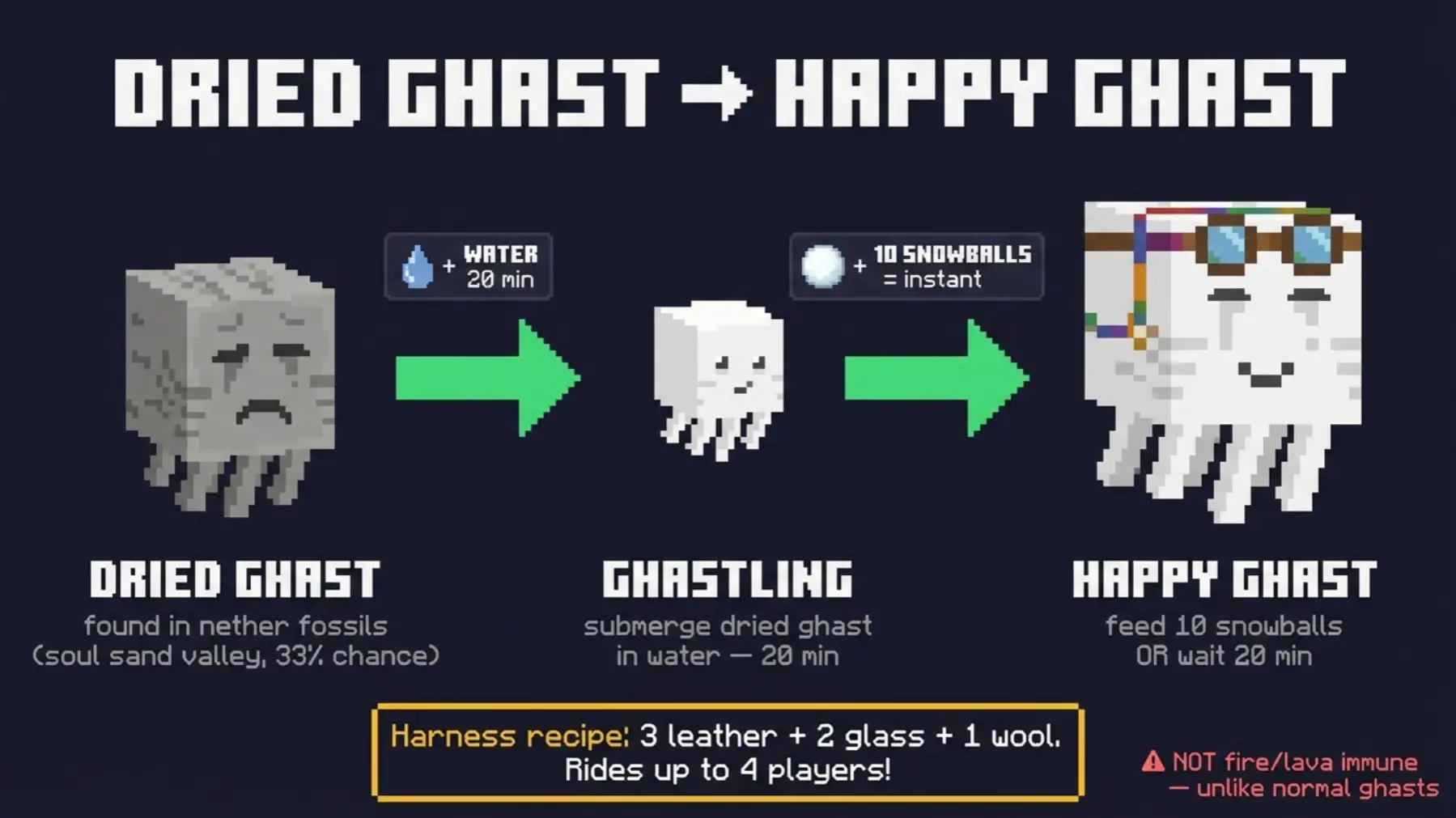
You can't find one in the wild, though. Happy ghasts have to be grown from a block you dig out of the Nether, and the whole process takes about 40 minutes (or a lot less if you plan ahead). Here's the full path from Nether fossil to flying mount.
The Short Version
- Find a dried ghast block in the Nether, inside nether fossils in soul sand valleys
- Bring it to the Overworld and submerge it in water
- After 20 minutes it hydrates and becomes a ghastling
- Feed the ghastling 10 snowballs for instant growth (or wait another 20 minutes)
- Craft a harness and put it on the adult happy ghast
- Climb on and fly
Step 1: Find a Dried Ghast Block
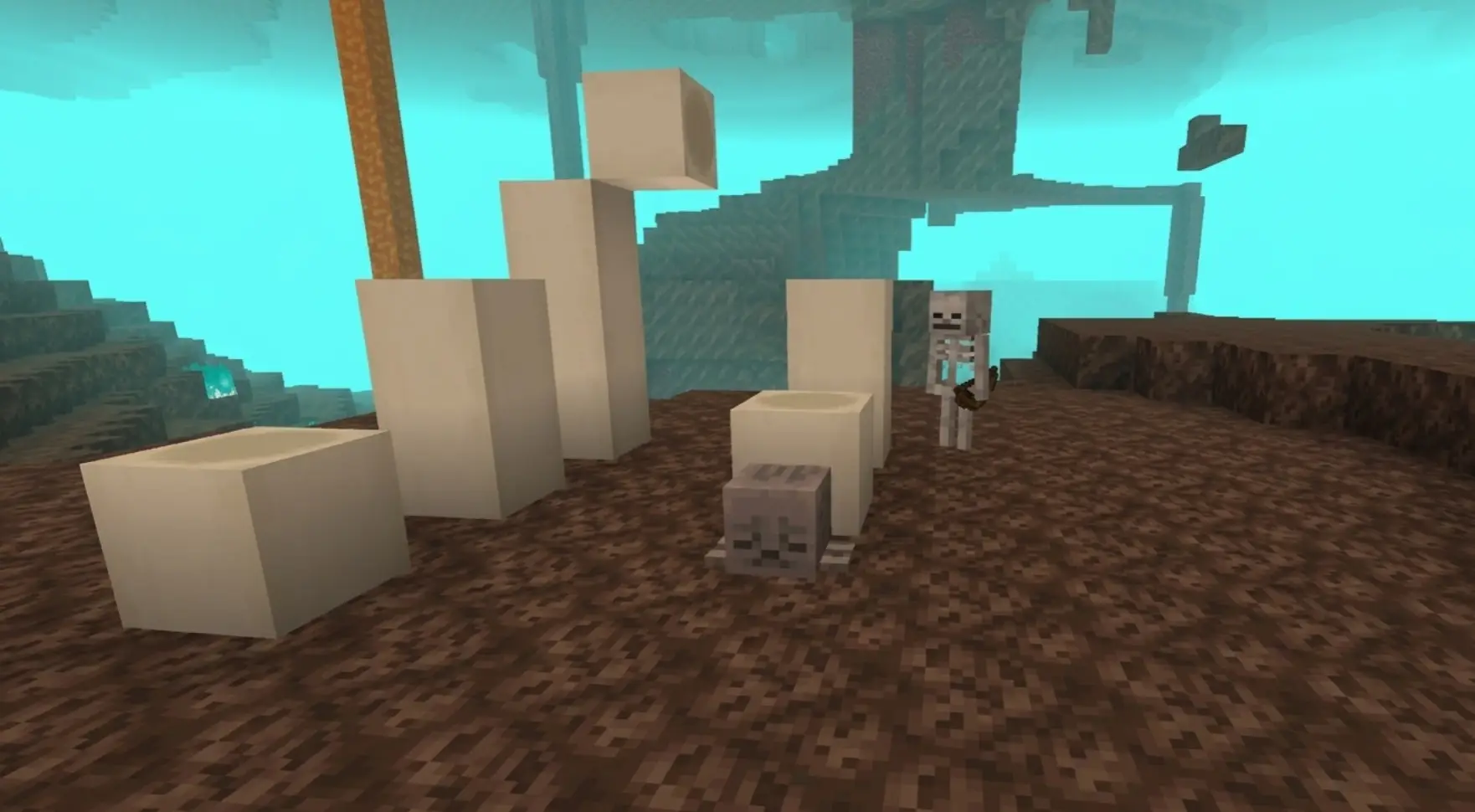
Dried ghast blocks generate in the Nether, specifically inside nether fossils in soul sand valley biomes. Nether fossils are the large white bone-block structures scattered across the valley floor.
Each fossil has roughly a 33% chance of containing a dried ghast block. So check a few fossils if the first one comes up empty.
The block itself is easy to recognize: a single grey block with a sad, frowning ghast face on it. You can mine it by hand, no special tool needed. It won't break or disappear, so just grab it and head back to your portal.
Tip: soul sand valleys are dangerous. Ghasts everywhere, skeletons spawning constantly, and open sightlines that make you an easy target. Bring a bow, a shield, and blocks for cover.
Step 2: Hydrate It in Water
Take the dried ghast block back to the Overworld and place it somewhere you can flood with water. Then submerge it completely.
Once it's in water, the block starts rehydrating. This takes 20 minutes of real time. You'll see the block's face change through four visible hydration stages as it goes, so you can check on progress by looking at its expression.
Pick a good spot for this. When the block finishes hydrating, a ghastling pops out right there, and it'll want space. A shallow pool in an open area works better than a cramped hole.
Step 3: Grow the Ghastling
After 20 minutes, the block transforms into a ghastling: a small, floaty baby version of the happy ghast. It drifts around the area and follows players holding snowballs.
To grow it into an adult, you have two options:
Wait 20 more minutes. It'll mature on its own.
Feed it 10 snowballs. On Bedrock, feeding 10 snowballs to a newly spawned ghastling makes it grow instantly. This is the fast route and the reason you should stock up on snowballs before you start.
Snowballs are easy to get: break snow blocks or snow layers with a shovel. One snow block gives you 4 snowballs, so three snow blocks covers the whole growth. Grab them from any snowy biome before you begin and you can skip the second 20-minute wait entirely.
Ghastlings can't be harnessed or ridden. You have to wait for the adult stage.
Step 4: Craft a Harness
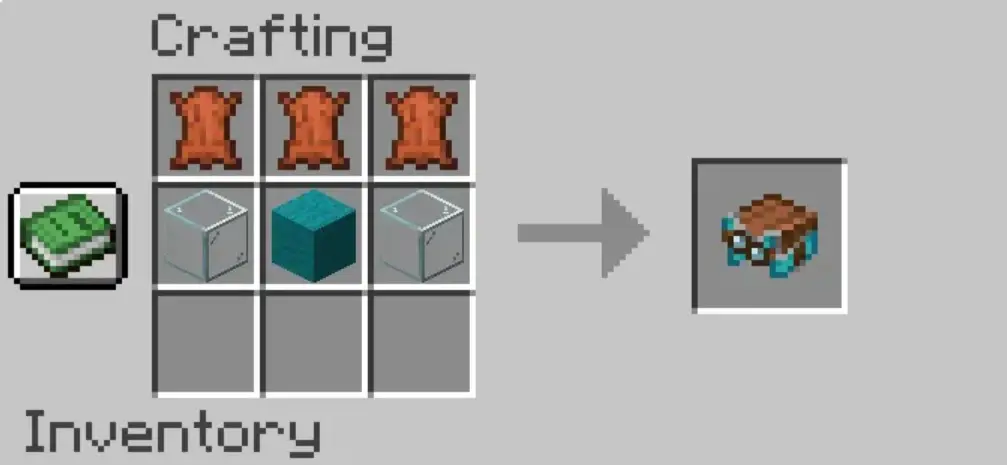
The harness is what lets you ride the happy ghast. It's a new item added alongside them.
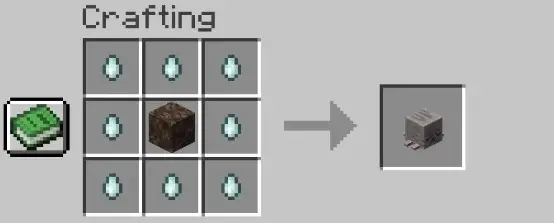
Recipe:
- 3 Leather across the top row
- 2 Glass blocks on either side of the middle row
- 1 Wool in the center of the middle row
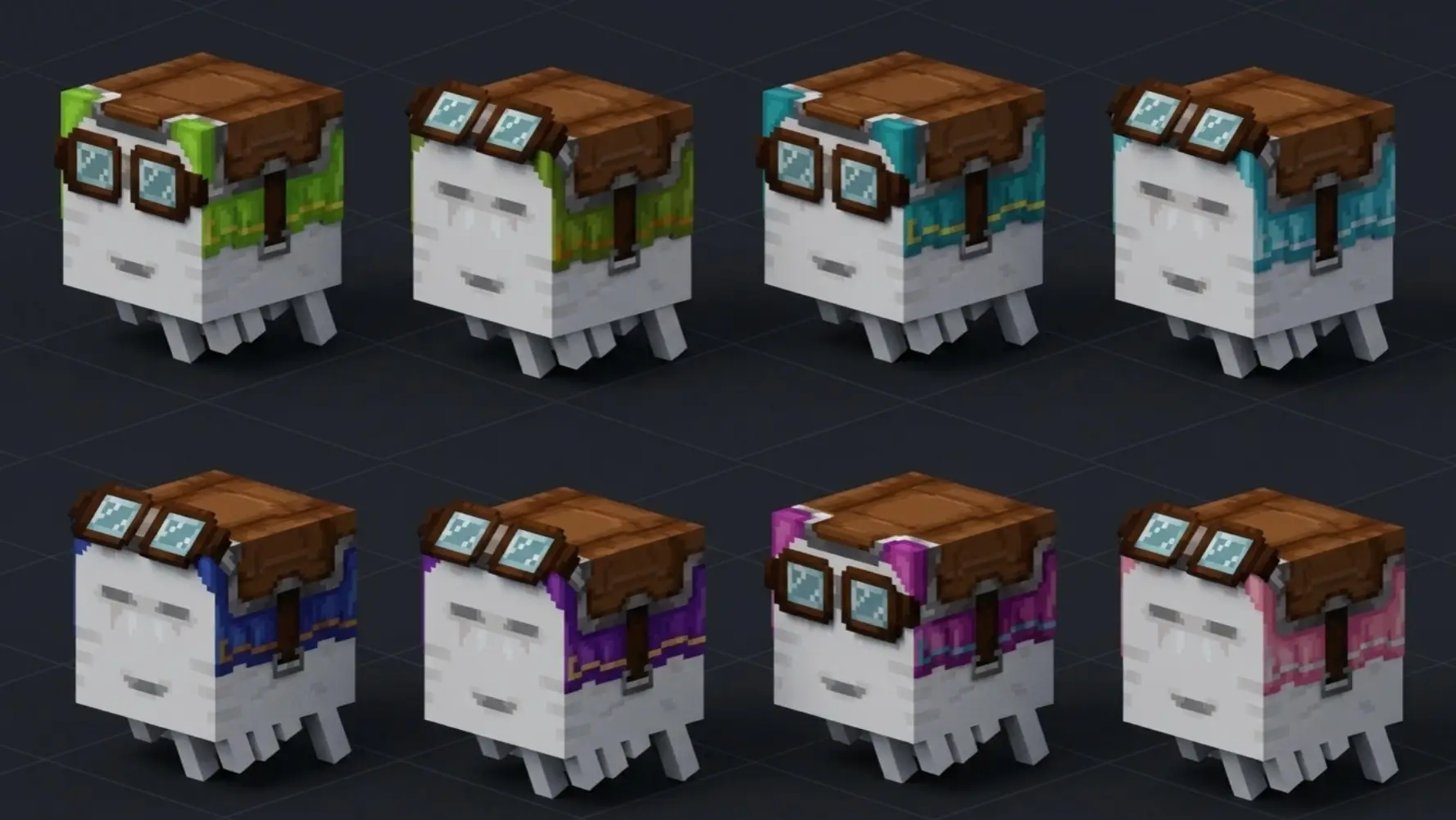
The wool color determines the harness color, and there are 16 variants. Purely cosmetic, so pick whatever you like.
All three materials are early-game accessible: leather from cows, glass from smelting sand, wool from sheep. You can have a harness ready before you even go to the Nether.
Step 5: Equip and Ride
- Hold the harness and approach the adult happy ghast (it'll actually follow you if you're holding a harness or snowballs)
- Interact with the ghast while holding the harness to equip it. The goggles appear on its head.
- Interact with the harnessed ghast again to mount it
- You're flying
Up to four players can ride at once. The first player on top controls the flight; the other three ride along on the sides of the harness.
Things That Make Happy Ghasts Genuinely Useful
It's a flying platform. If you stand on top of an unharnessed happy ghast, it stops moving completely and acts like a solid platform you can walk around on. Perfect for building at height without scaffolding.
You can dismount mid-air. Stand on its head while it hovers, place blocks, then get back on. Building floating structures becomes trivially easy.
It can tow boats. Attach a leashed boat or chest boat to a happy ghast and it'll carry it. This lets you transport mobs and items over long distances by air. Leashed mobs don't take fall damage when the ghast descends onto a flat surface.
Longer lead range. Happy ghasts can be leashed with a lead that stretches up to 16 blocks, compared to 12 for most mobs.
Home Radius: Why Your Ghast Wanders Off
Happy ghasts stay within a set radius of where they spawned, which the game treats as their "home."
- Unharnessed: roams within 64 blocks of home
- Harnessed: stays within 32 blocks of home
If your ghast keeps drifting away from where you want it, use a lead to tie it to a fence post. That keeps it exactly where you left it.
Important Warnings
Happy ghasts are NOT fire or lava immune. Unlike regular ghasts, they take full damage from fire and lava. Don't fly one through the Nether casually and definitely don't park it near lava.
Water dismounts you. If you fly a happy ghast into water, you get dismounted. Watch out for waterfalls and lakes when flying low.
They can't defend themselves. Happy ghasts don't shoot fireballs and don't panic when damaged. They're completely passive. Protect yours from hostile mobs, especially if you leave it somewhere unattended.
They can't be tamed in the traditional sense. There's no taming mechanic like wolves or cats. The ghast is friendly to everyone because you raised it, not because it bonded with you specifically.
Common Problems
"I can't find a dried ghast block." They only generate in nether fossils in soul sand valley biomes, and only about a third of fossils have one. Check multiple fossils. If your soul sand valley is small, travel to find a bigger one.
"The block isn't turning into a ghastling." It needs to be fully submerged in water, and it takes a full 20 minutes of real time. Check that water is actually covering the block on all relevant sides.
"The snowballs aren't making it grow." On Bedrock you need 10 snowballs on a newly spawned ghastling. Make sure you're actually feeding it (interact while holding snowballs) rather than throwing them at it.
"I can't put the harness on." Ghastlings can't wear harnesses. It has to be a fully grown adult happy ghast. If it's still small, it's not ready.
"My ghast disappeared." It wandered outside your render distance, or something killed it. Leash it to a fence post when you're not using it.