
How to "Tame" an Axolotl in Minecraft Bedrock
You typed "how to tame an axolotl" picturing a little pink buddy that follows you around like a wolf, sits when you tell it to, and comes running when you whistle. Fair enough. That is not how axolotls work.
Here is the honest version: you cannot tame an axolotl. There is no "owned by you" state like there is with wolves or cats. What you can do is catch one in a bucket so it never despawns, breed them, and take a squad of them to war against guardians. Which, let's be real, is way cooler than a sit command. The genuinely hard part isn't "taming" at all. It's finding the things in the first place.
The Quick Answer
- You can't tame axolotls. No taming item, no ownership, no sitting.
- Find them in lush caves, scoop one up with a water bucket, and it's yours to keep (a bucketed axolotl never despawns).
- Breed them by feeding two adults a bucket of tropical fish each.
- They fight aquatic mobs for you and heal you in return, which is the real reason to bother.
That's the whole thing in four lines. The rest of this guide is about doing each step without wasting an afternoon or drowning a bucket of amphibians on the walk home.
Where Axolotls Spawn on Bedrock
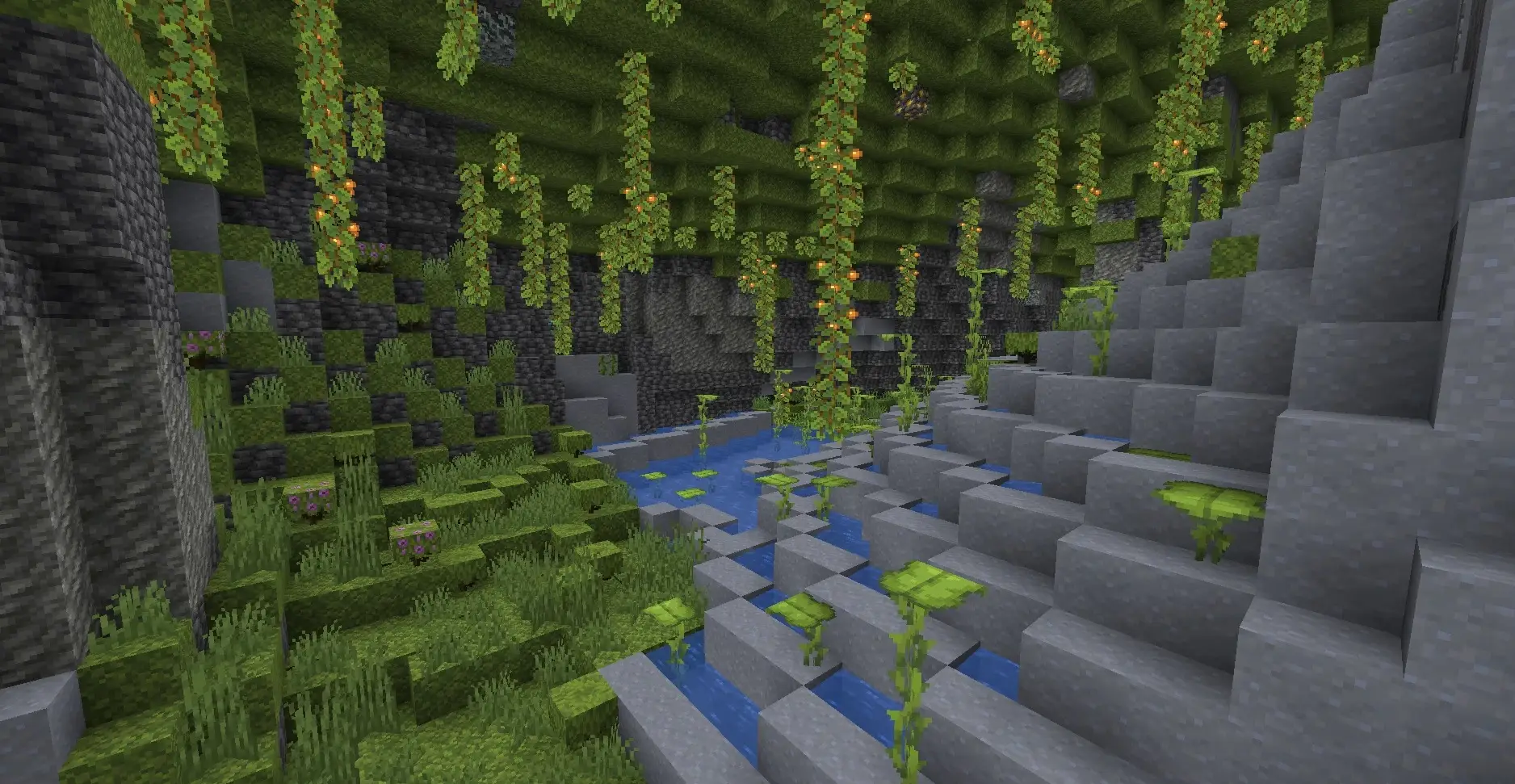
Axolotls only spawn naturally in one place: the lush caves biome, underwater. Rivers, oceans, regular caves, your fish pond at home, none of it counts. If it isn't a lush cave, no axolotls.
The game checks a few specific conditions before one can appear:
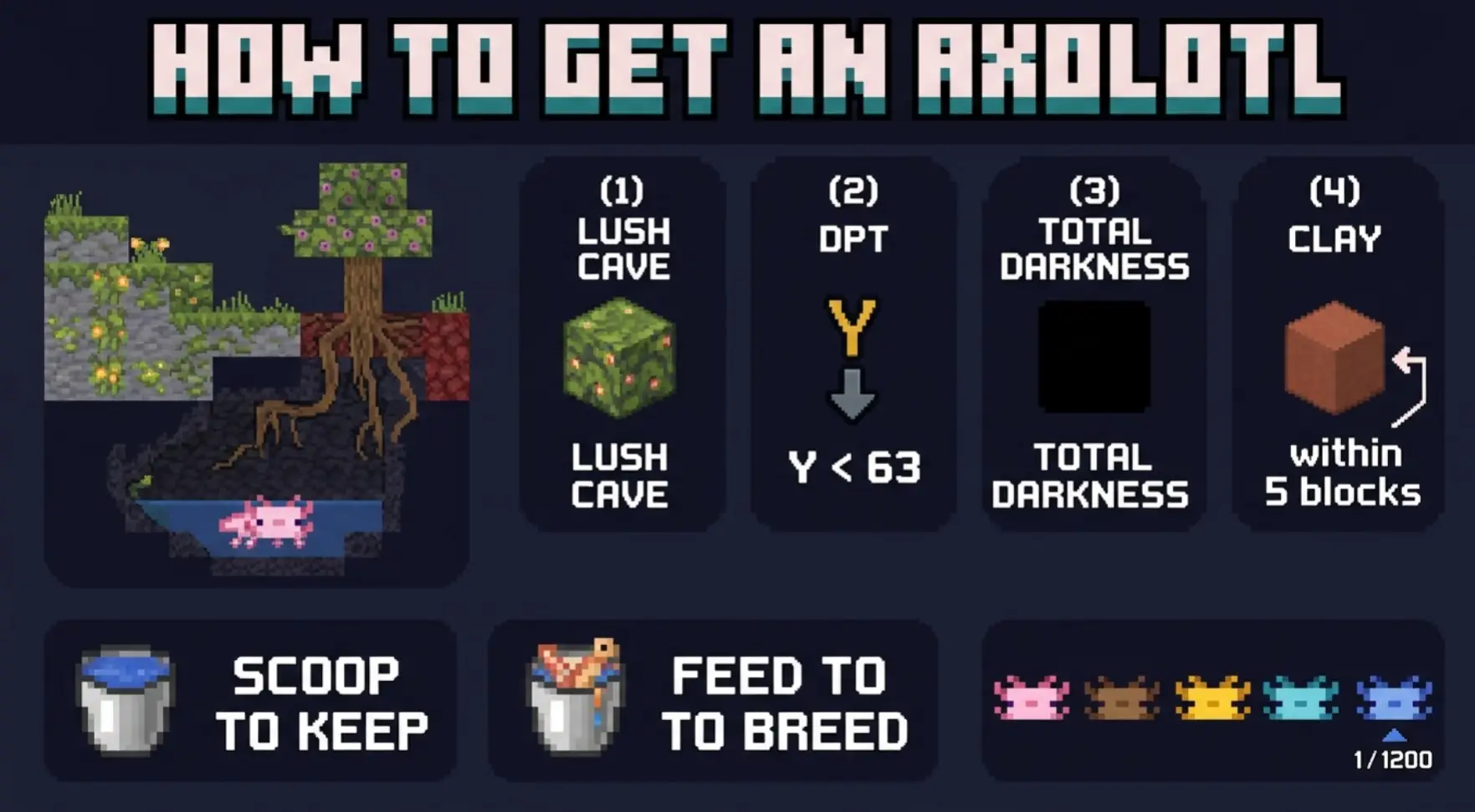
- Lush caves biome, in a water source block.
- Below Y=63 (sea level). They won't spawn in surface pools.
- Total darkness, light level 0. Any torch or glow berry nearby kills the spawn.
- A clay block within 5 blocks below the spawn space. This is the detail most people miss, and it's why axolotls cluster around the little clay-bottomed water pools that dot lush caves rather than being scattered everywhere.
They spawn in groups of four to six, so if you find one, there are usually more nearby.
The best way to find a lush cave is from the surface. Look for an azalea tree, a distinctive bushy tree with pink flowers that generates directly above a lush cave. Spot one, dig straight down beneath it (carefully, you're heading below sea level into water), and you should break into the glowing, moss-covered cavern. Don't fixate on a single Y-level, though. Lush caves generate across a wide range of depths, so an azalea tree is a far more reliable marker than any specific number.
If you'd rather skip the wandering, you can start in a world that puts a lush cave near spawn. There are some good lush caves seeds if you want a head start.
How to "Catch" One (The Closest Thing to Taming)
Once you've found an axolotl, capturing it is simple: point a water bucket at it and use it. The bucket has to actually contain water, an empty bucket won't work. You'll get a bucket of axolotl, and you can place it back down anywhere.
This is the important bit. A bucketed axolotl will never despawn, which makes bucketing the real equivalent of "keeping" one. A wild axolotl you leave swimming around can eventually vanish. One you've scooped and re-placed is permanent.
You can also attach a lead to an axolotl, but leads are best saved for walking one into an ocean monument fight, not for transport. On land, an axolotl on a lead is exposed to the air and slowly drying out. For any real distance, always use a bucket instead.
Breeding Axolotls
Since you can't tame them, breeding is how you build a collection. You'll need buckets of tropical fish (catch tropical fish with a water bucket, same as you'd bucket any fish, they show up in lush caves and warm oceans).
- Get two adult axolotls close together, ideally in a small water pen.
- Feed each one a bucket of tropical fish. They'll enter love mode with the little heart particles.
- A baby axolotl appears. It grows into an adult over time, and you can speed that up by feeding it more tropical fish.
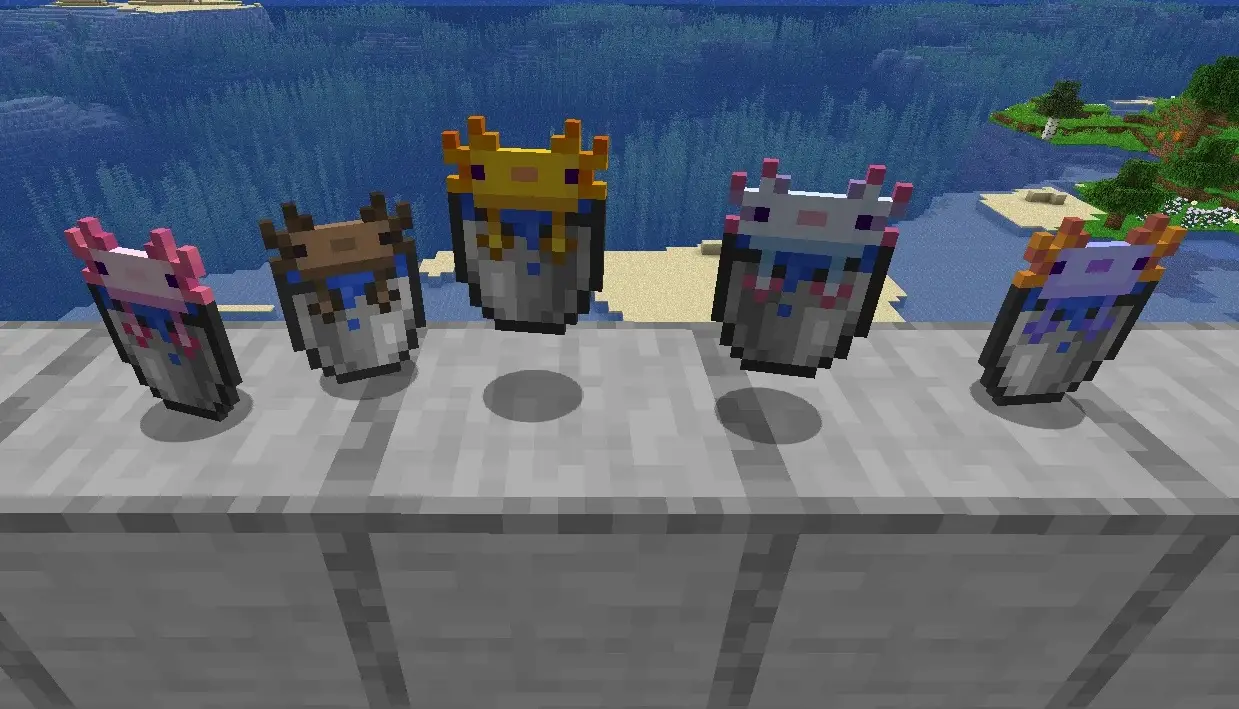
Bedrock catch: you can't hold a bucket in your off-hand on Bedrock like you can on Java. That matters here, because the moment you feed one axolotl, your hand is holding an empty bucket and the second axolotl loses interest and swims off. Keep several tropical fish buckets on your hotbar and switch to the next one fast, or breed them one careful pair at a time.
The Five Colors and the Blue One Everybody Wants
Axolotls come in five colors: leucistic (pink, the classic "Lucy"), wild (brown), gold, cyan, and blue.
The first four spawn naturally with equal odds. Blue does not. Blue axolotls cannot spawn in the wild at all. The only way to get one is by breeding, and the odds are brutal: each baby has a 1 in 1200 (about 0.083%) chance of rolling the blue mutation. The other 99.9% of the time it just copies one of its parents' colors.
There's no pity system and no way to grind toward it. Every single birth is an independent 1-in-1200 roll, so you might get one on your fifth baby or your two-thousandth. The one bit of good news: once you finally have a blue, breeding it dramatically improves your odds of more blues.
Worth knowing before you sink hours into this: the blue color is purely cosmetic. Every variant has identical stats and behavior. Blue is a flex, not an upgrade.
What Axolotls Are Actually For: Combat
This is the payoff. Axolotls are excellent underwater allies. They automatically attack most aquatic mobs, including fish, squid, glow squid, drowned, guardians, and elder guardians. They leave turtles, dolphins, frogs, and other axolotls alone, and they will never attack you.
In return, they heal you. When you kill a mob that an axolotl was fighting, you get Regeneration I, and any Mining Fatigue on you is removed. Bring a group and those effects stack up.
Here's a clean Bedrock advantage: that Regeneration buff is uncapped on Bedrock. On Java, it maxes out at 2 minutes no matter how many axolotls are helping. On Bedrock there's no such ceiling, so a big swarm can keep you topped up through a long fight. This makes a bucket squad genuinely strong for raiding an ocean monument: bring 5 to 10 axolotls in buckets, release them inside, and let them chew through the guardians while they heal you.
They also have a great survival trick. If an axolotl takes damage underwater, it has a chance (roughly 1 in 3) to play dead, flopping to the floor for about 10 seconds. While it's "dead," hostile mobs ignore it and it regenerates health, then pops back up and rejoins the fight. So don't panic if yours suddenly drops, it's not actually gone.
Just remember they fight underwater, so you'll want to sort out your own oxygen first. If you're heading into a monument, our guide on how to breathe underwater pairs well with an axolotl raid.
Bedrock vs Java: The Differences That Matter
Most axolotl guides are written for Java and gloss over these. Here's where Bedrock behaves differently:
- Combat regeneration is uncapped on Bedrock. Java caps the heal duration at 2 minutes; Bedrock has no cap, so large groups heal you longer.
- No off-hand bucket on Bedrock. Java players hold fish in the off-hand to keep axolotls interested during breeding. You can't, so breeding is a little more fiddly.
- Drowned spawn in shallow water on Bedrock. Java drowned won't. If you build an open-air breeding pen, this matters, light up the surrounding area or drowned may appear right in it.
- DIY spawn rooms need an opaque ceiling on Bedrock. If you build an artificial lush-caves spawner (dark water over clay), Bedrock also requires the room's ceiling to be opaque blocks. And if that room sits below Y=30, the same conditions spawn glow squid too, which will clog up your axolotl spawns.
"Taming" was always the wrong word. There's nothing to tame. Find a lush cave under an azalea tree, scoop an axolotl into a water bucket so it's yours for good, breed a few more with tropical fish, and if you're patient (or lucky) chase that 1-in-1200 blue. Then do the thing they're actually built for: take a bucket full of them into an ocean monument and let them heal you through the fight. That's a much better companion than a pet that just sits.