
Minecraft Dappled Forest Guide: Poplar Trees, Wool Stairs, and More
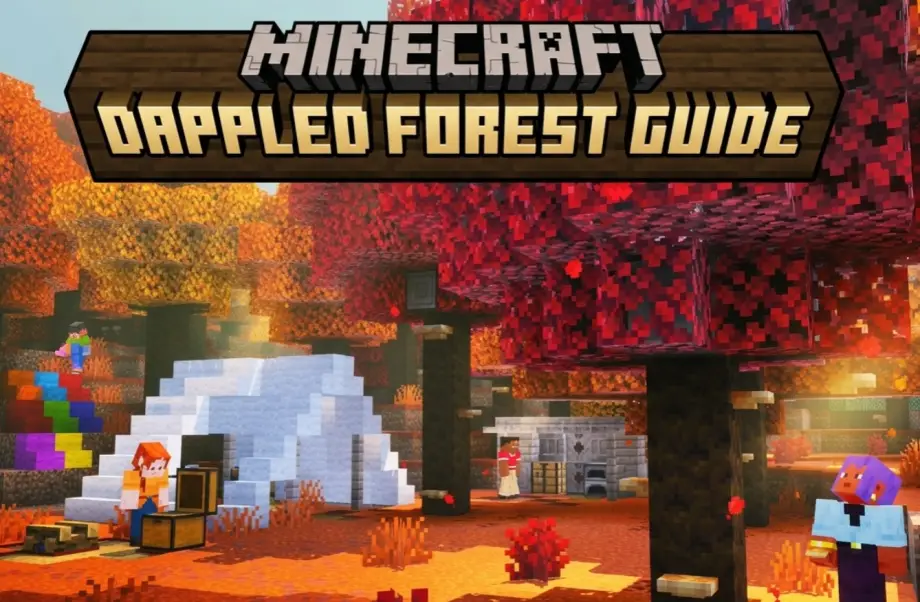
Minecraft is getting an autumn biome. The dappled forest arrives with the Third Drop of 2026, bringing poplar trees in red, orange, and yellow, a new wood set, wool stairs and slabs in all 16 colors, and a handful of small blocks that quietly change how you build.
It's currently in testing. Here's everything confirmed so far, straight from Mojang's official changelog, plus what's announced but not yet playable.
Quick Facts
- What it is: A new autumn-themed forest biome
- Where it generates: Near cold biomes in the Overworld
- Headline feature: Poplar trees with three leaf colors and matching falling leaf particles
- New blocks: Poplar wood set, shelf mushrooms, red shrubs, straw beds, cushions, wool stairs and slabs (16 colors each)
- Best new item: Straw beds let you skip the night without resetting your spawn point
- New mobs: None. The biome uses existing animals in their cold variants.
- Status: Experimental in Bedrock Preview 26.40+ and Java 26.3 snapshots. Full release targeted for Q3 2026.
Where to Find the Dappled Forest
The dappled forest generates near cold biomes. That's the official positioning, so look toward taigas, snowy regions, and the transitional zones around them rather than searching warm or tropical areas.
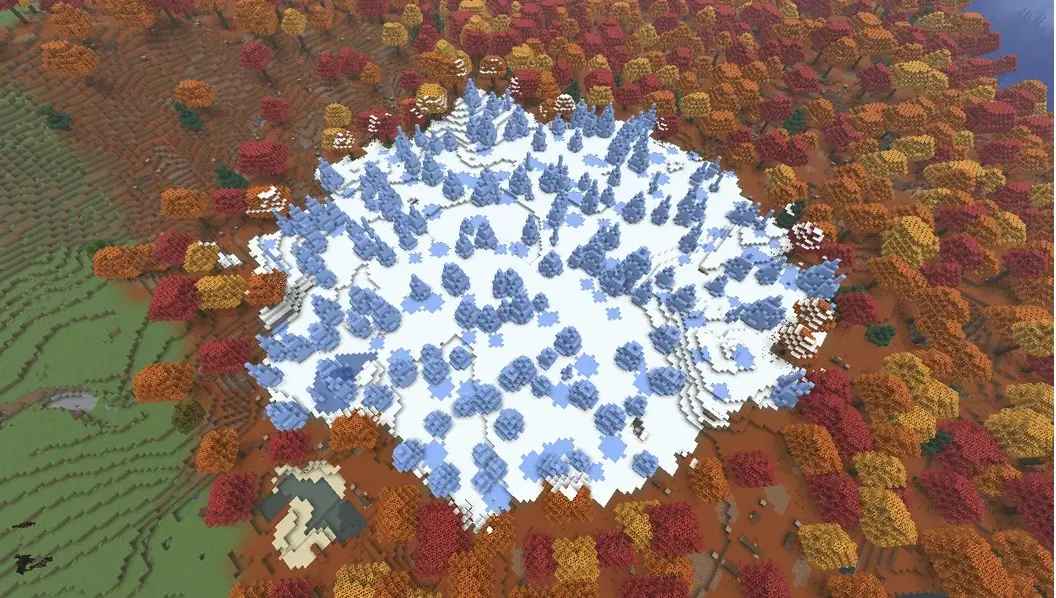
You'll know it immediately by the canopy. Poplar trees come in red, orange, and yellow, and they drop matching colored leaf particles constantly, so the whole biome has a drifting autumn effect similar to cherry groves or pale gardens.
Other visual markers: fallen poplar logs lying on the ground, patches of leaf litter, small red shrubs, and shelf mushrooms growing off tree trunks.
Poplar Trees
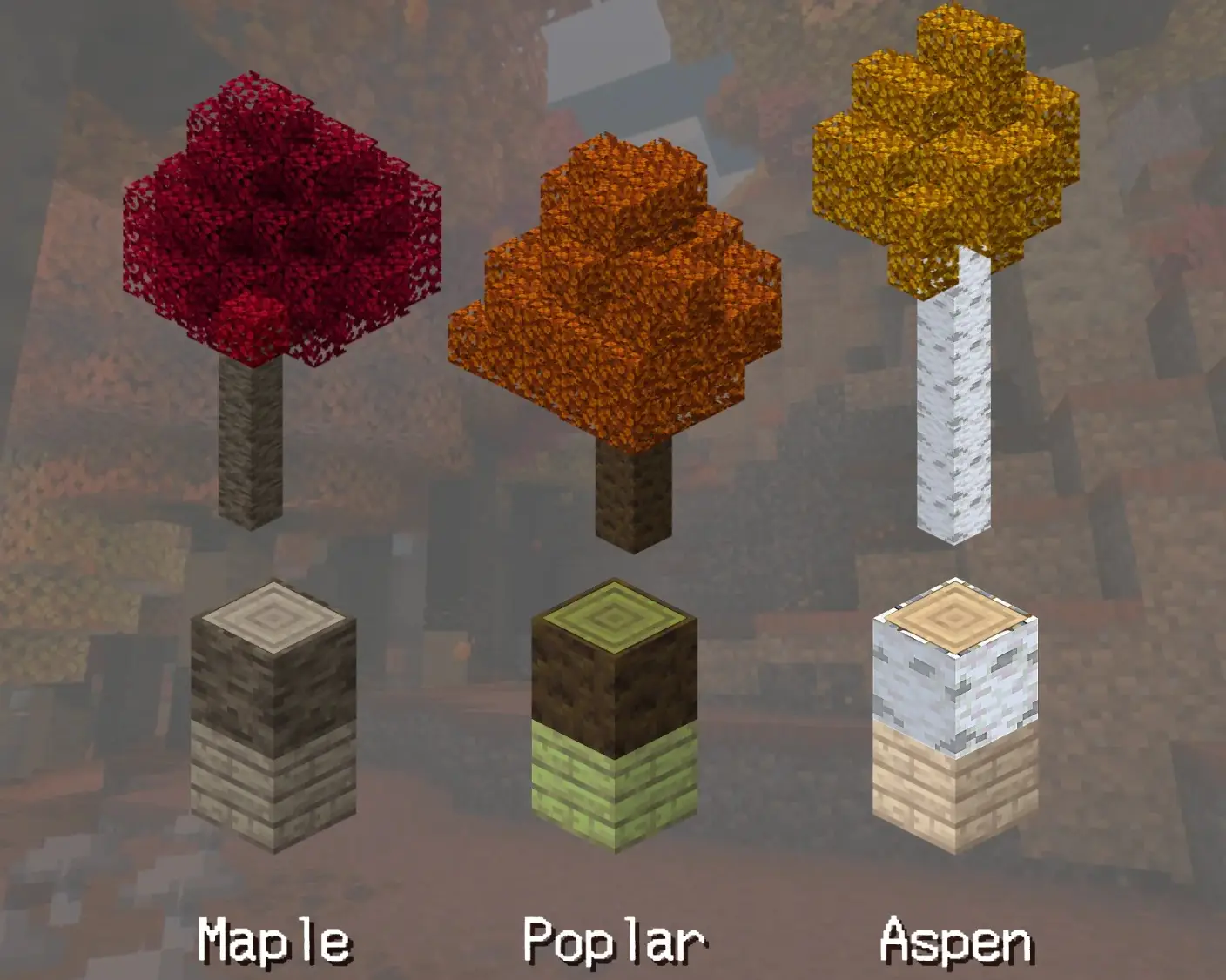
The centerpiece of the biome. Poplar trees come in three color variants:
- Red Poplar Leaves
- Orange Poplar Leaves
- Yellow Poplar Leaves
Each variant produces its own falling leaf particles matching the leaf color, so a mixed grove has red, orange, and yellow particles drifting down simultaneously.
The Sapling Catch
Here's the detail that matters most for builders, and it's easy to miss.
Poplar leaves drop poplar saplings, but there's only one sapling type. When you plant it, it randomly grows into any of the three color variants. You cannot choose. There's no red sapling or yellow sapling.
So if you want a specific color for a build, you have two options: harvest the leaves and logs directly from a naturally generated tree of that color, or plant saplings repeatedly and break the ones that grow the wrong color. For a large themed build, harvesting from the wild is far more efficient.
Poplar Wood Set
The trunks are made of poplar logs, which craft into a complete wood set: planks, stairs, slabs, signs, hanging signs, buttons, pressure plates, doors, fences, fence gates, trapdoors, stripped variants, and a poplar shelf.
There are also poplar boats and poplar boats with chest, so it's a full first-class wood type rather than a partial set.
You can also get poplar saplings from wandering traders, which is useful if you find a trader before you find the biome itself.
Ambient Sound
A small but nice touch: forest ambience sounds are tied to poplar leaf blocks. Build with them and you get the forest atmosphere wherever you place them.
Known issue: as of Preview 26.40.27, some Vibrant Visuals settings aren't being applied correctly to poplar leaf blocks. If your leaves look off with Vibrant Visuals enabled, that's a known bug, not your settings.
Shelf Mushrooms
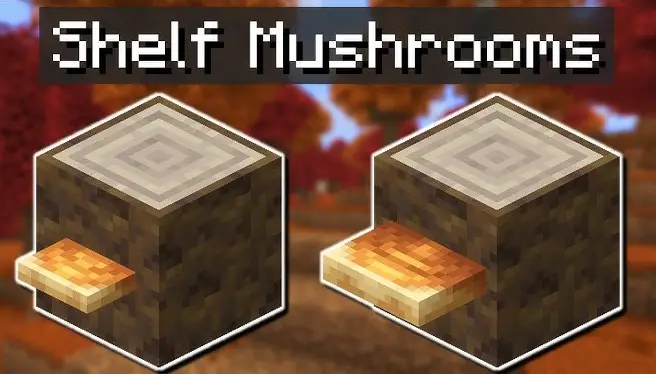
A new mushroom type that generates on poplar trees and fallen poplar logs. They're more interesting than they first appear.
- They come in two sizes: small and large
- Using bone meal on a small shelf mushroom grows it into a large one
- A large shelf mushroom drops two items when broken, so bone-mealing before harvesting doubles your yield
- They can be used like other mushrooms to make stews
- They're available in wandering trader trades
- They have a slight bounciness when stepped on, similar to beds
That last point is the sleeper feature. A block with mild bounce that isn't a slime block or a bed opens up subtle parkour and decorative possibilities, and it's the kind of thing technical players will find uses for quickly.
The bone meal doubling is also worth building a habit around: bone meal every small shelf mushroom before you break it and you walk away with twice the mushrooms for one bone meal.
Red Shrubs
A decorative plant block that generates in small patches across the dappled forest.
- Can be used in a composter, so it's a viable bone meal source
- Using bone meal on a red shrub grows another red shrub in a random adjacent space, if one is available
The bone meal spreading behavior means you can cultivate a patch of red shrubs for decoration or for composting, similar to how you'd spread other ground cover.
Wool Stairs and Slabs (All 16 Colors)
This is the change that will affect the most builds, and it has nothing to do with the biome itself.
Wool now has stairs and slabs in all 16 colors: black, blue, brown, cyan, gray, green, light blue, light gray, lime, magenta, orange, pink, purple, red, white, and yellow.
Why this matters for builders:
Soft-textured slopes. Until now, any angled or stepped surface had to use hard materials: stone, wood, concrete. Wool stairs let you build roofs, tents, cushioned seating, and rounded shapes with a soft texture.
Interior design. Wool slabs make convincing carpeting with depth, upholstered furniture, and layered bedding without stacking full blocks.
Color range. Sixteen colors across both stairs and slabs is a huge palette expansion for detail work, especially for builders who already dye wool for banners and carpets.
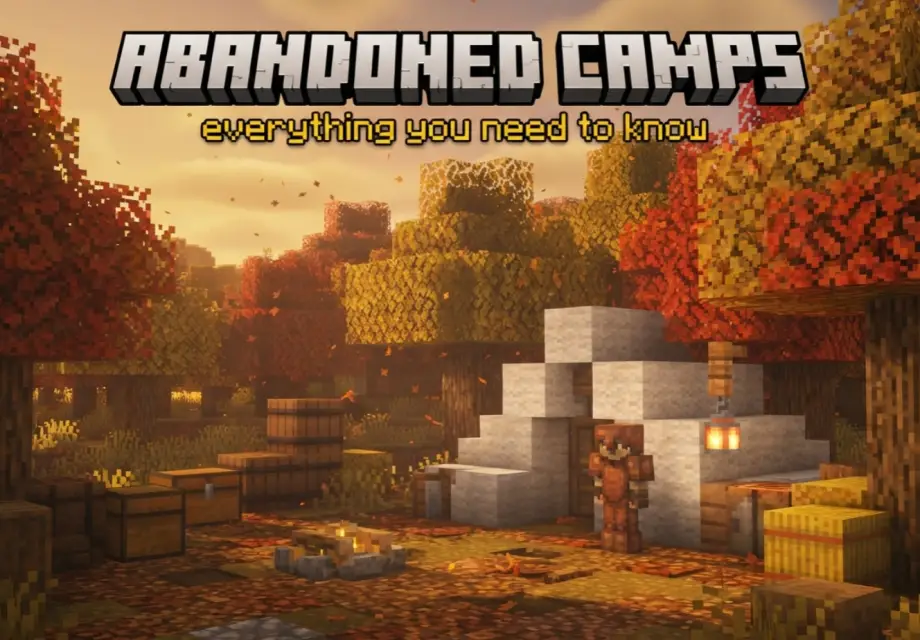
They're already used in world generation. The new abandoned camp structure builds its tents from wool stairs, which is a good preview of what they look like in practice.
Straw Beds
Straw beds are one of the most genuinely useful additions in this drop, and they solve a problem players have complained about for years.
Recipe: 3 hay bales make 4 straw beds. That's it. Hay bales are 9 wheat each, so a straw bed costs roughly 7 wheat. They also generate naturally inside abandoned camps.
What Makes Them Different From Regular Beds
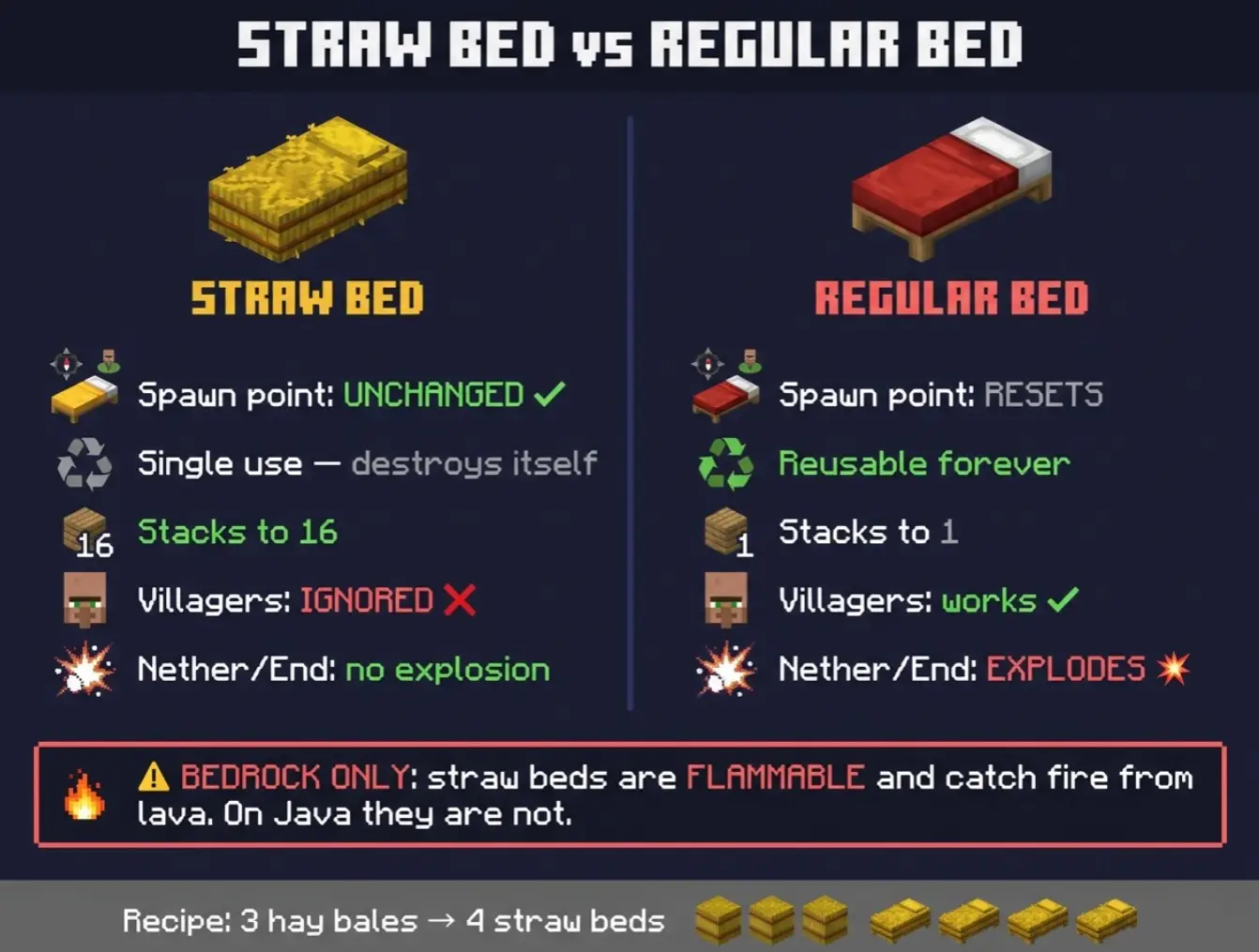
A straw bed lets you sleep through the night without resetting your spawn point. That's the entire point of the block.
If you've ever been 3,000 blocks from home, wanted to skip a night, and hesitated because sleeping would move your respawn away from your base, this fixes that exact problem. Sleep in a straw bed and your spawn stays wherever you set it.
The trade-off is that straw beds are consumable. Once you sleep in one, it destroys itself and drops nothing the moment you're no longer in it. That happens either when morning comes or when you leave the bed mid-sleep. One straw bed equals one night.
They stack to 16, which is unusual for a bed-type block and makes them practical to carry on expeditions. Sixteen straw beds is sixteen nights of skipped darkness.
No Explosions in the Nether or End
Regular beds and respawn anchors explode when you try to use them in the wrong dimension. Straw beds don't. If you use one in the Nether or the End, it simply destroys itself and drops nothing, exactly as if you'd slept in it.
Worth noting: this behavior is still under discussion. Content creators who tested it reported that Mojang asked for feedback on whether straw beds should explode, and the tester consensus leaned toward yes. So this could change before release.
Straw Beds Don't Count for Villagers
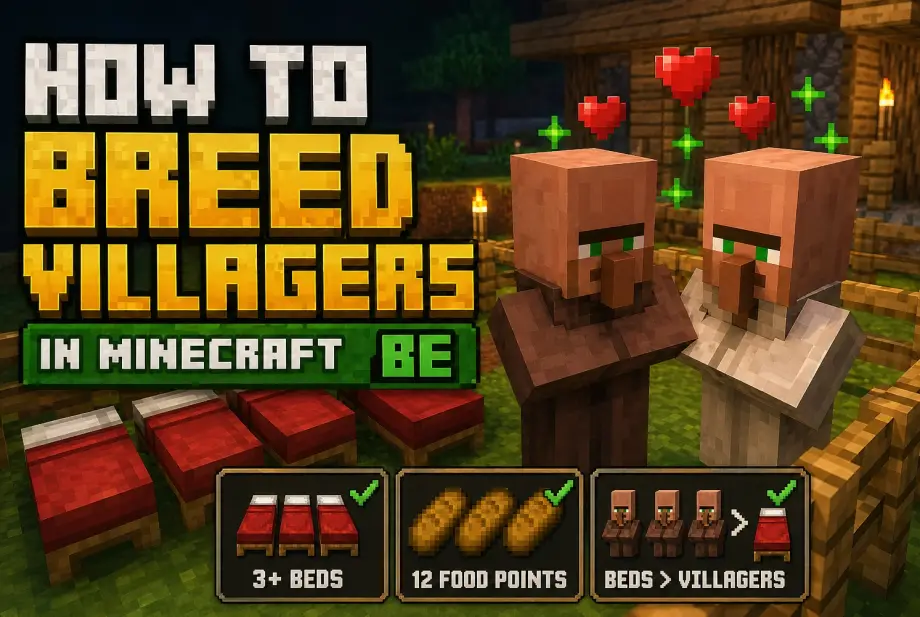
An important limitation for anyone building villager infrastructure: straw beds are not beds for villager mechanics. Villagers won't claim them, won't sleep in them, and they don't count toward the bed requirement for breeding.
If you're building a breeder or trading hall, you still need regular beds. Don't try to substitute straw beds to save wool.
Bedrock-Specific Warning: They're Flammable
Here's a difference that matters and that Java-focused guides will miss.
On Java Edition, straw beds are not flammable. On Bedrock Edition, they are flammable and catch fire from lava.
So if you're playing Bedrock, don't place straw beds near a campfire, a lava source, or anything that spreads fire. A Bedrock player following a Java tutorial that says "straw beds are fireproof" is going to lose their supply.
Building Tip: They Float
Straw beds have the same floating placement behavior as regular beds, meaning they don't need a block underneath to stay put. Combined with their yellow straw texture, that makes them excellent for building thatch roofs, which is a use the design team specifically noted.
They're also transparent and have very low hardness (0.2), so they break instantly with any tool.
Cushions
Cushions are also part of this drop, and there's a technical quirk worth knowing: cushions are implemented as entities, not blocks. That's the same approach Minecraft uses for boats and armor stands.
Functionally they're sittable furniture, giving Minecraft a proper dedicated sitting block for the first time. Because they're entities rather than blocks, expect them to behave a little differently from normal furniture blocks in terms of placement and interaction.
Detailed cushion mechanics are still settling, so treat specifics as provisional until they appear in a stable release.
Mobs in the Dappled Forest
No new mobs. The biome spawns existing passive and neutral animals, using their cold variants where applicable:
- Sheep
- Chicken
- Cow
- Pig
- Rabbit
- Fox
The cold variant detail is a nice touch since it visually ties the biome to its cold-biome neighbors. If you're hunting for specific mob variants for a collection or a themed farm, this is a convenient place to find several at once.
Abandoned Camps in the Dappled Forest
The dappled forest has its own variant of the new abandoned camp structure, dressed with poplar wood, leaf litter, and shelf mushrooms to match the biome.
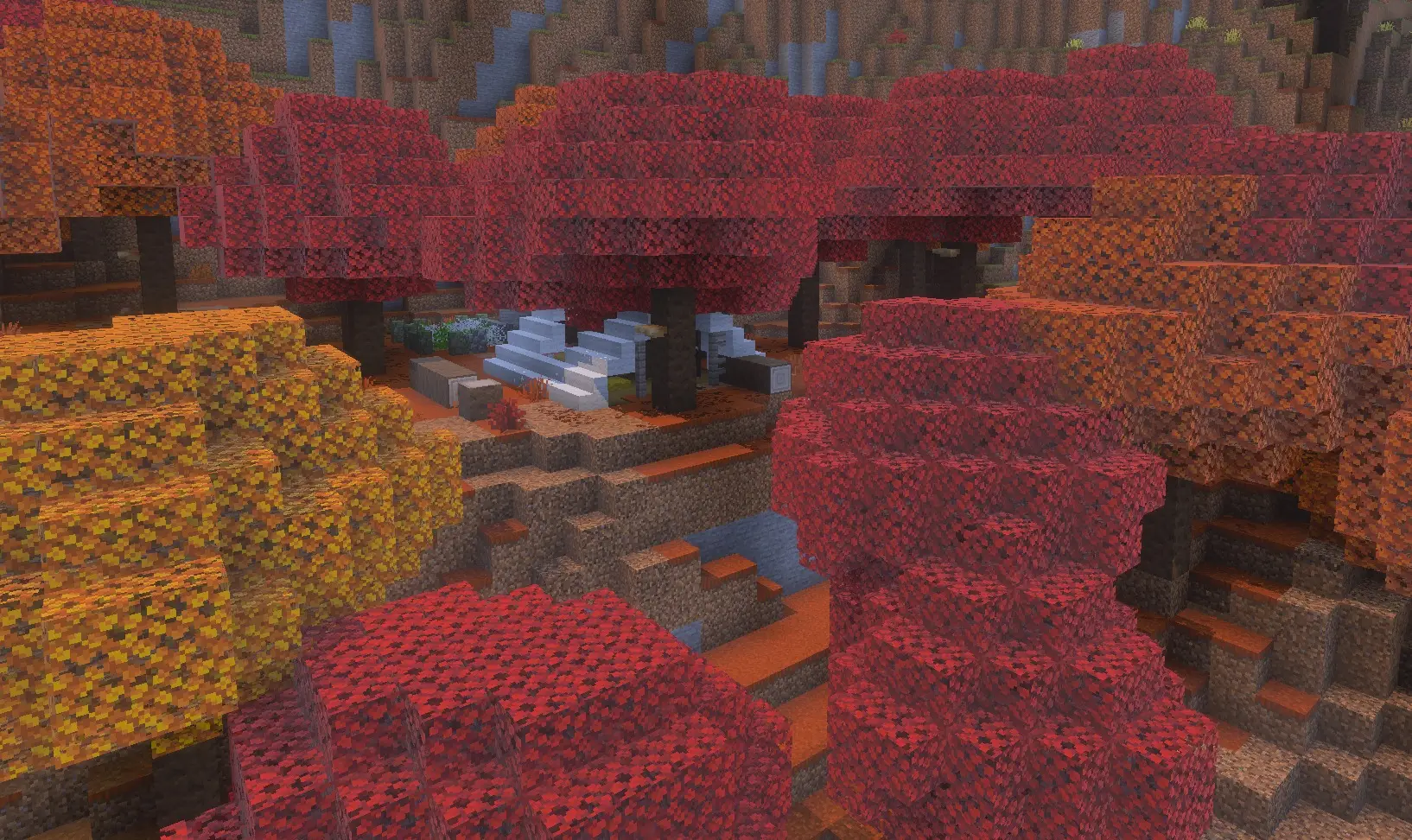
Abandoned camps generate in 18 biomes total, each with its own themed variant. Per Mojang's official changelog, the full list is:
- Meadow
- Cherry Grove
- Forest
- Birch Forest
- Old Growth Birch Forest
- Flower Forest
- Windswept Forest
- Dappled Forest
- Taiga
- Snowy Taiga
- Old Growth Spruce Taiga
- Old Growth Pine Taiga
- Sparse Jungle
- Bamboo Jungle
- Swamp
- Savanna
- Wooded Badlands
- Pale Garden
Each camp contains chests and barrels with loot. For the full breakdown of what's inside and the hidden chest most players miss, see our abandoned camps guide.
Build Ideas for the New Blocks
Autumn cabin. Poplar logs and planks for the structure, orange or red poplar leaves for the canopy overhead, brown wool stairs for a soft-looking roof, and shelf mushrooms as trim on the walls.
Cozy interiors. Wool slabs as layered rugs, wool stairs as couch and armchair bases, and red shrubs in pots for color.
Mixed-color grove. Since saplings grow randomly into any of the three colors, plant a large patch and let it come out mixed. The combined red, orange, and yellow leaf particles look genuinely striking together.
Market stalls and tents. Wool stairs make excellent fabric awnings and tent roofs, which is exactly what the abandoned camps use them for.
Composting setup. Red shrubs into a composter for a renewable bone meal source, which you then use to double your shelf mushroom yields. Small loop, but it works.
Wrapping Up
The dappled forest is a builder-first addition. There's no new mob to fight, no new dimension, no progression change. What you get instead is a genuinely pretty biome, a new wood set, and wool stairs and slabs in every color, which is probably the most quietly useful building addition in a while.
Three things worth remembering when you get in:
- Poplar saplings grow into random colors, so harvest from wild trees if you need a specific shade
- Bone meal your shelf mushrooms before breaking them to double the drop
- Straw beds skip the night without moving your spawn, stack to 16, and are flammable on Bedrock. Carry a stack when you travel, and keep them away from fire.